Thanks, Grandma: Rediscovered zucchini recipe brightens meatless menu

zucchini casserole bread

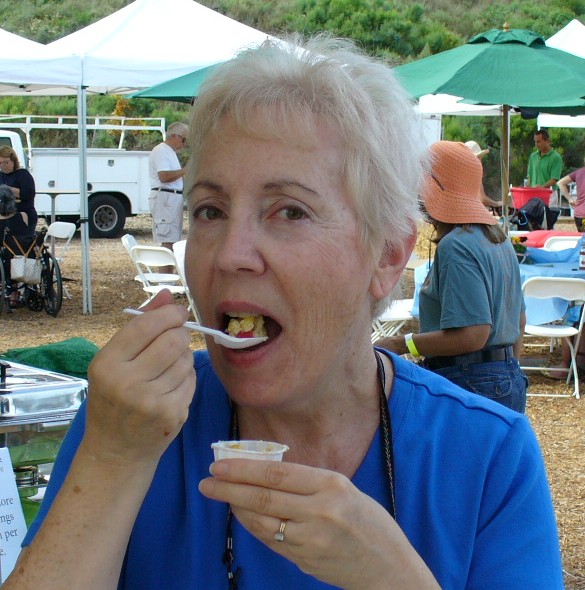
Zucchini Casserole Bread is something different for a meatless meal. Serve with soup and/or salad. (Photos by Laura Groch)

When life gives you a bag of surplus zucchini, here’s a vegetarian dish to help you make use of them. It’s a nice option for those observing Meatless Fridays for Lent and/or Meatless Mondays or Meatless Every- and Anydays. (It’s also worth bookmarking for when the zucchini days of summer arrive.)

I rediscovered this dish recently while rummaging through my cookbooks for something a little different. (And yes, I had extra zucchini to use.) Grandma Teresa Continue reading

The Buttery and the Crowdie

spinach-filled buttery, crowdie

The “buttery” (or at least part of it) containing “Crowdie” served at the Scottish Cafe and Restaurant at the Scottish National Gallery in Edinburgh.                                     Photo by Laura Groch


Jack in the Box’s recent ads for their new “buttery” burger reminded me that I haven’t written anything about our Scottish adventure, and the tale of “The Buttery and the Crowdie.”

We took a wonderful trip to Scotland last September: Edinburgh, Inverness and Orkney, the last of which is very far north and off the mainland (Orkney encompasses several islands full of WWII history and ancient monoliths). The scenery and history were magnificent; the people were so friendly; and the food, Continue reading

More than one turkey in this kitchen: Some of my kitchen disasters

apple-cranberry crisp

My Thanksgiving blunder yielded a sparkling clean fridge, and this warm apple-cranberry crisp. (Photo by Laura Groch)

Being an experienced cook — even of the home variety — doesn’t guarantee perfection. Memories lapse, attention wanders, and before you know it, disaster strikes.

One lesson I learned early is not to cook when I’m angry. Many years ago, my husband and I were experimenting with what was then a new food on the American scene — tofu. I couldn’t tell you today what we were bickering about, but as we argued, we stir-fried the heck out of that poor block of soy. By the time we were finished, so was the tofu — a pulverized mess. And we had to eat it, because there was nothing else.

On another afternoon (also many years ago), Continue reading

Four Thanksgiving resolutions, plus cranberry sauce

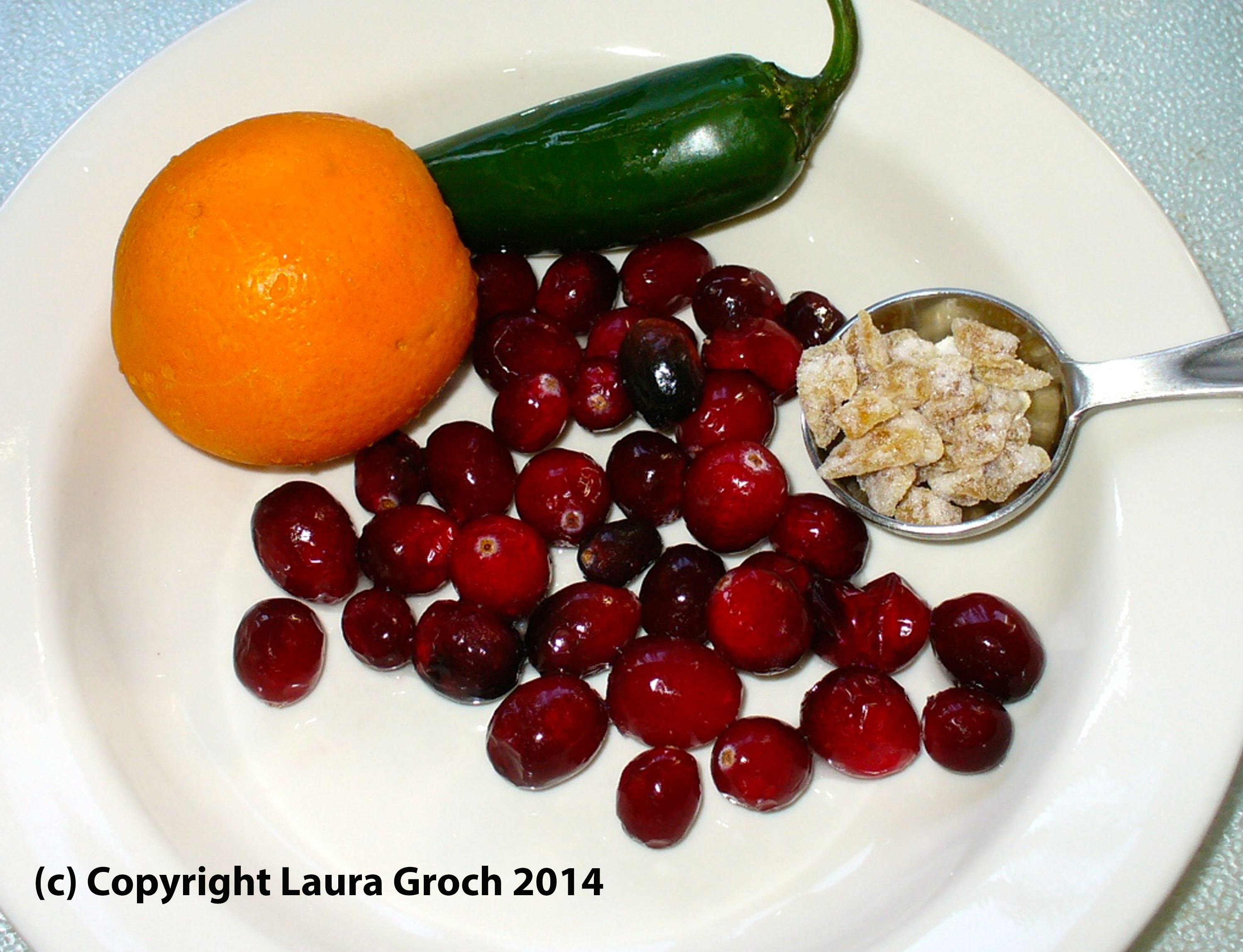
cranberries, orange, jalapeño, ginger

Want to freshen that cranberry sauce? Try adding some orange peel (left), crystallized or candied ginger (right) or a bit of chopped jalapeño pepper (top). Or perhaps a blend of all three. (Photo by Laura Groch)

Thanksgiving oughta be when we make life-altering resolutions, not the new year. I think we have a lot better chance of achieving new goals when they’re food-based, not regret- and hangover-based. So I offer my Thanksgiving resolutions:

1) Have lots of food. I attended two dinners with a hostess who doled out the Continue reading

Consolation in the kitchen

My husband likes to say that when his wife gets upset, she starts cooking, so he can’t lose. He exaggerates, of course; but when things go topsy-turvy, I admit I do find some solace in kitchen duty.

So when I recently received sad news of a friend’s passing, I found myself consulting cookbooks, looking for something to bring to the family.

In a cookbook from my early days as a bride, I found a recipe for Rhubarb Nut Bread. This friend was originally from the Midwest, so a Midwestern pie and dessert staple like rhubarb seemed somehow fitting. And I had rhubarb in the Continue reading

Soft-boiled eggs and Winnipeg: Thank you, Mrs. Carsted

soft-boiled egg, egg cup

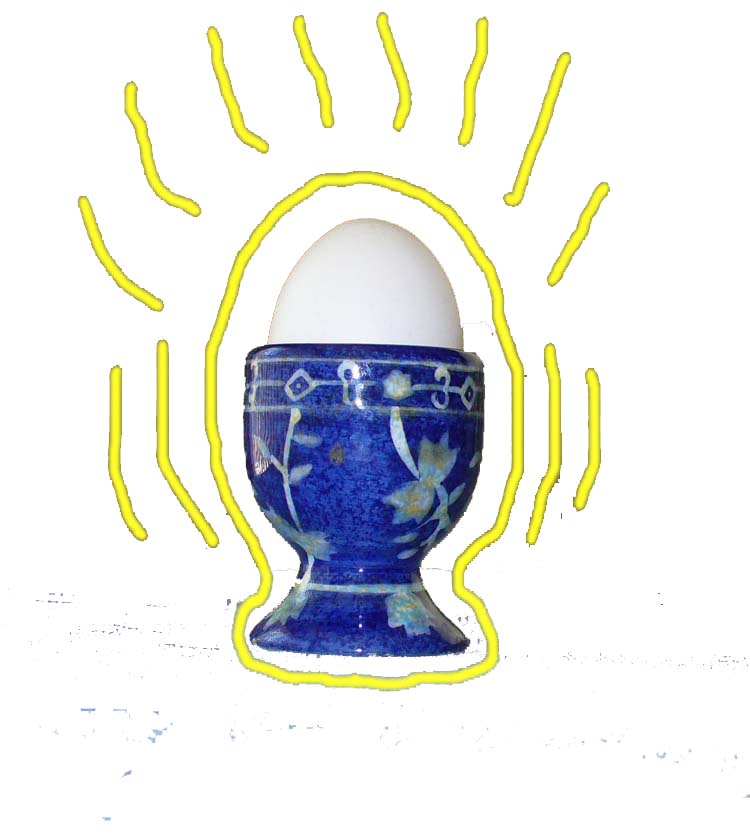
The simple egg took on a whole new dimension for us when we dove into the soft-boiled version. (c) Photo by Laura Groch 2014


One of my favorite leisure-morning breakfasts is the soft-boiled egg. I love eggs anyway, for breakfast, lunch or dinner, but the soft-boiled egg is special to me for several reasons. I enjoy the ritual of timing the eggs, of fishing them out of the hot water and centering them in the little blue-flowered egg cups my Continue reading

Dozens of reasons to enjoy a cookie exchange

Image

Above: The assorted cookies I brought home from our recent cookie swap. For a cookie swap, you bake only one batch but end up with a beautiful assortment of delicious cookies. (Photos by Laura Groch) 

If you’ve never taken part in a cookie exchange before, let me recommend this enjoyable way to share the holiday spirit. And it’s not too late in the season to organize one.

I don’t remember where I first heard about cookie exchanges or cookie swaps, but I do know that the idea immediately struck me as a winner: Bake one batch of cookies, get together with a group of friends, and divvy up the cookies. Go in with snickerdoodles, come out with chocolate chip, peanut blossoms, rugelach, Mexican wedding cakes and more, depending on the group.

I enlisted my officemates to try it out, and it worked so well that we started a December tradition. Not only was it fun, it was efficient and saved buckets of time when everyone was being pulled in several directions at the holidays. This year found me swapping with another group of friends, who were also pleased with the results.

As I said, it’s not too late for you to enjoy the fun, creativity and rewards of doing a cookie exchange. (How about organizing one for a Saturday-or-Sunday-before-New-Year’s get-together!) All you need are 1) a batch of homemade cookies; 2) a few friends, relatives or colleagues (make sure one of you is good at math!); 3) about 90 minutes to make the exchange in whatever place you designate; and 4) an extra container to put your shared cookies into while others are taking from your batch.

The basic idea is to divide the cookies by the number of bakers, then each one takes that number of cookies from everyone else. So if you have 6 people, you bake, say, 4 dozen cookies (48). Forty-eight is evenly divisible by 6 (6 x 8 = 48). Everyone keeps 8 of his or her own cookies, takes 8 from everyone else’s batch, and you go home with 48 cookies, the same number you brought in, except you now have six different kinds.

At least, that was the way this recent cookie exchange was supposed to work. But I managed to goof up the neat calculations by not counting myself in the group. We really had 48 cookies each to be divided among 7 bakers. (Oy.) So — we instead took 7 each, then divvied up the remainder. Which is what you might have to do, too. (Or you can reverse-engineer it: Choose a number, say 6 cookies apiece, multiply it by the number of cookie swappers, then everyone bakes that amount.)

We used to have as many as a dozen people, and we’d each bake as many as 6 dozen cookies (also a nicely divisible number). Something always happens, though. One person always bakes more, another bakes fewer — recipes are variable, after all, and so is the human hand. But someone else always manages to figure it all out to everyone’s satisfaction.

The cookies don’t have to be fancy — not at all. Of course, if your specialty is an elaborately decorated cookie, go for it. Just don’t be disappointed that others can’t match your baking prowess. Remember, they’re all still tasty cookies!

The one big rule is that the cookies must be homemade. It’s not fair to those who actually made dough and shaped and decorated it (or even just dropped spoonfuls onto a cookie sheet). They put effort into their cookies, no matter how simple (or blobby). It’s just not right to hand over a machine-made cookie in exchange for an individually made little work of art.

And they are all works of art, I can assure you, from the humble oatmeal cookie to the sophisticated palmier. The sight of them arrayed on a plate will gladden your heart as much as anything by Picasso or Renoir or Wyeth.

Or Norman Rockwell, for that matter. Bringing together different people and traditions and recipes to share them with each other is about as American as it gets, in my view — and it also reflects the spirit of the season.

Really, there’s no good reason why the Christmas/Chanukah/Kwanzaa time of year should hold a monopoly on pretty cookies. In fact, we’re already planning a Valentine’s Day cookie exchange.

Image

Above: Cranberry Refrigerator Rounds (OK, they’re a little oblong) are what I made for a recent cookie exchange. (Photo by Laura Groch)

I made this refrigerator cookie for our recent cookie swap, but used cranberries this time instead of apricots. It’s from “Gifts From Your Kitchen,” by Better Homes and Gardens (Meredith, 1976).

APRICOT REFRIGERATOR ROUNDS

1 cup butter or margarine

1 1/2 cups packed brown sugar

1 egg

1/2 teaspoon almond extract

2 1/2 cups all-purpose flour

1 teaspoon baking powder

1/2 teaspoon salt

1 cup finely chopped dried apricots (or cranberries)

1/2 cup finely chopped nuts

Cream together butter and brown sugar till light. Blend in egg and almond extract. Stir together flour, baking powder and salt; stir into creamed mixture. Stir in apricots and nuts. Shape into two rolls 1 1/2 inches in diameter. Wrap in waxed paper. Chill well. Cut in 1/4-inch slices; place on ungreased baking sheet. Bake at 350 degrees for about 10 minutes. Makes 6 1/2 dozen.

Notes: I used butter, not margarine, and about 1/4 cup of nuts (I used walnuts) instead of 1/2 cup. A knife will do to chop dried apricots, but I used kitchen shears to chop the cranberries.

(c) copyright Laura Groch 2013

Thankful for a special Italian recipe

Image

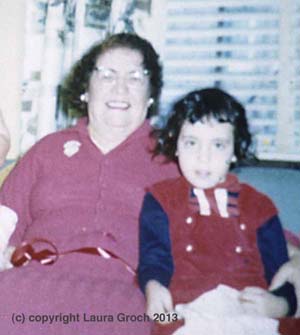
My maternal grandmother, “Nini,” and her rumpled granddaughter, who still makes her special Thanksgiving stuffing. (c) copyright Laura Groch 2013
Wishing you all an early Happy Thanksgiving! :<)

Everyone’s Thanksgiving is full of rituals beyond the turkey. As a kid, the family must-haves included a local TV station’s annual showing of “March of the Wooden Soldiers,” the Laurel and Hardy classic, followed by watching the Macy’s Thanksgiving Day parade.

Our table offered Italian antipasto — black olives, salami, artichoke hearts — and we drank asti spumante, not red wine or beer.

Gloppy green bean casserole was unheard-of; instead, we had fresh broccoli and a green salad, and my grandmother’s special stuffing ladled out of the bird.

After dinner, the turkey carcass rested majestically on the stove for several hours as we all picked at it, no doubt contributing to the eventual upset stomachs that were also a holiday ritual (we didn’t know as much then about food poisoning as we all do today).

On Thanksgiving Days now, I start the preparations by turning on the parade as background accompaniment. (Sadly, no one broadcasts “March of the Wooden Soldiers” any more.)

We still do the antipasto plate, the asti and the broccoli. But we no longer stuff the turkey; that concession to speed and food safety came years ago, with stuffing now prepared on the side.

And the turkey, which these days is grilled by my husband over mesquite wood on the faithful Weber, is bustled into the fridge right after serving instead of breeding bacteria as in days gone by. (Some rituals you just don’t need to keep.)

But my grandmother’s special stuffing is still one of my favorite things about Thanksgiving.

A skilled midwife from Sicily who immigrated to Brooklyn, she wanted her grandkids to call her Nini (to rhyme with “mini”). She became familiar with American foods through her clients and her children. It took a little trial and error — when her daughter, my mother, wanted peanut butter, for example, Nini bought it, but was mystified when the sandwiches didn’t come out quite right. A more Americanized uncle had to explain that jelly was also needed to make a classic PB&J.

I like to think that must be how this recipe came about: When Nini learned that stuffing was expected in the American turkey, she created it her way, using rice and Italian sausage.

I think it’s delicious. Nini is long gone, but she returns to our table every year when I make this simple recipe for the rest of the family. Here’s how my mom dictated it to me.

NINI’S SAUSAGE AND RICE STUFFING

Cook 1 cup white rice in 2 cups chicken bouillon or giblet water (water you cooked the turkey giblets in).

Brown 3/4 pound Italian sausage (skinned and broken up) with 1 medium onion, chopped, 1 clove garlic, chopped, and 1 stalk celery, chopped.

Drain off fat.

In casserole dish, combine sausage mixture and rice; mix well. Top with grated Parmesan cheese. Bake in 350-degree oven for about 15 minutes. Serves 4.

Notes: You can make this with brown rice, or turkey sausage; you can add the chopped, cooked giblets to it or not. Adjust the amount of celery or onion to your taste. I like it browned a little on top to make some crispy bits.

(c) copyright Laura Groch 2013

Ciao — we’ll miss “Sopranos” actor Gandolfini

Woke up this morning — and heard the sad news about James Gandolfini’s death. He did a tremendous job as Tony Soprano, which is how most people knew him and will remember him, though the actor distinguished himself with many other parts in TV, plays and movies after that landmark HBO series.

I can’t do a recap of Gandolfini’s life and career — I’ll leave that to the entertainment writers — but his passing made me think back fondly on “The Sopranos” and the many surprises, shocks and suspense-filled moments it offered viewers during its run.

In 1999, a friend in the HBO publicity department sent me the first four episodes of “The Sopranos” before it aired. “You’re Italian,” she said. “Tell me if you’re offended.” After watching just two episodes, I told her I loved it and couldn’t wait to see the rest. Thus began a Sunday-night ritual that lasted until 2007.

When the show was about to end that year, I wrote a piece for the North County Times suggesting various foods for a Sopranos-related menu to accompany watching the final episode. The story recalled the important role food had played in the show, because it is central to Italian-Americans’ lives, period:

— Livia sets the kitchen on fire, thus precipitating her move to a nursing home and her ordering a hit on son Tony in revenge.

— Hotheaded Chris Moltisanti shoots a slow-moving bakery store clerk in the foot, a nod by the writers to actor Michael Imperioli’s role in “Goodfellas,” in which he is shot in the foot by Joe Pesci.

— The many meals enjoyed at gangster wannabe Artie Bucco’s new restaurant, after his previous one was torched to prevent a mob hit that would have hurt future business.

— And the many sub sandwiches “brought in” by the guys to their offices at the Bada Bing club.

— The immortal line, “So what, no f—in’ ziti now?” uttered by young A.J. Soprano when he learns his grandmother isn’t coming to a family barbecue.

— Carmela Soprano’s lasagna, passed off by Tony’s sister Janice as her own in order to impress lonesome widower Bobby Baccala.

— The ricotta pie, one of the most effective weapons used in the show. Carmela offered the pie to an acquaintance who was unwilling to write a recommendation letter for daughter Meadow’s college application. Carmela made it oh-so-clear that the request, like the pie, was not to be denied.

— And of course, the final scenes, which took place in a diner as the family munched on onion rings before the hotly argued blackout ending.

In that last episode, A.J. reminded Tony of some advice he once offered him: “Remember the good times.” I’m sad at the too-early passing of a fine actor, but glad for the memories he gave us.

RICOTTA-PINEAPPLE PIE

(From “The Sopranos Family Cookbook,” Allen Rucker and Michele Scicolone, Warner Books, 2002)

1 tablespoon unsalted butter, softened

1/4 cup fine graham cracker crumbs

1/2 cup sugar

2 tablespoons cornstarch

One 15-ounce container ricotta cheese

2 large eggs

1/2 cup heavy cream

1 teaspoon grated lemon zest

1 teaspoon vanilla extract

For topping:

One 20-ounce can crushed pineapple in syrup

1/4 cup sugar

1 tablespoon cornstarch

2 teaspoons fresh lemon juice

Preheat oven to 350 degrees. Spread butter over bottom and sides of a 9-inch pie pan or springform pan. Add crumbs, turning pan to coat bottom and sides.

In large bowl, stir together the sugar and cornstarch. Add ricotta, eggs, cream, lemon zest and vanilla, and beat until smooth. Pour mixture into the prepared pan. Bake for 50 minutes, or until pie is set around the edges but center is still slightly soft. Cool to room temperature on wire rack.

To make topping: Drain pineapple well, reserving 1/2 cup liquid. In a medium saucepan, stir together the sugar and cornstarch. Stir in the 1/2 cup pineapple juice and the lemon juice. Cook, stirring, until thickened, about 1 minute. Add the pineapple. Remove from the heat and let cool slightly.

Spread pineapple mixture over pie. Cover and chill for at least 1 hour before serving. Serves 8.

Notes: I used 1/2 cup skim milk instead of the 1/2 cup cream in this recipe to lighten it a bit, and it came out great. I think a blueberry topping would also be great on this.

(c) copyright Laura Groch 2013

Farm cooks vs. city gal? No contest

The San Diego County Fair is in full swing, and I promised you a story about competing in the food contests, so …

I was a young reporter on my first job in the Indiana heartland. My beat was education, but also general assignment, which on a small-town daily paper meant I could write about pretty much anything I wanted. But we were in the county seat, so when the annual county fair came around, all of us did fair stories.

Born and bred in New York City, I didn’t know much about county fairs. Midway games, rides, cotton candy, oh, and something to do with livestock. My co-workers rapidly brought me up to speed on 4-H and the many different contests that were integral parts of the fair.

When someone explained the food competitions, a little spark went off. “Why don’t I compete? City slicker vs. the home folks. It could be fun,” I volunteered. My boss agreed.

Looking over the contest categories, I was disappointed to see that there was no category for eggplant parmigiana, one of my specialties at the time. OK, I’d enter something else. Canning? No. Preserves? Nope. Baking? THAT I could do.

I chose banana bread, which had its own category. I had made banana bread before, and it had turned out fine. How hard, really, could this cooking competition stuff be? Maybe I’d enter a few other categories, too, like apple pie and brownies, and take home a pile of ribbons.

But time got away from me, and the night before the competition, I completed only one item, the banana nut bread. The recipe was from my lone cookbook at the time, a paperback Fannie Farmer. And the bread turned out just fine, a burnished brown block of banana goodness.

I brought it to the fairgrounds as a contestant that morning, and returned later in the day as a reporter to observe behind the scenes of the baked-goods judging.

The judge was a slim young woman named Dee Ann Cabell, a 10-year 4-H member at the time who had majored in home economics at Purdue University. She had been judging at fairs for about seven years, doing about six fairs a year. And she knew her stuff.

When I arrived, she was finishing with the white and wheat breads. Cabell looked each loaf over and evaluated its shape and color. She then took a small taste, served to her by one of the culinary committee members, who were hovering like nurses around a surgeon. She made her notes, then commented diplomatically (because many committee members were undoubtedly also contestants), “All of those are really nice.”

Next came the crescent dinner rolls, several to a plate. Cabell addressed the first entry. The end point of one roll was too short; another curled below the roll’s bottom. “These are not uniform,” she noted. “Also, there’s too much flour on the bottom.” Another roll was chided for its uneven size and browning.

That’s when I realized that my banana bread and I were in trouble.

What the city slicker hadn’t known was that there were standards governing what made a prize-winning dinner roll, a perfect pie crust. To enter the brownie category, for example, you had to submit six. They had to meet the criteria of the category (not too tall! not too pale! not too airy!), and they had to be identical in shape, size and color. Taste was just one factor among many.

Finally, the banana breads were up. Cabell looked at my sturdy brown loaf, sliced into it, and instantly sighed, “She didn’t mash her bananas enough.”

(Talk about judgment. I’d now be known around town as “Laura, the lazy banana masher.”)

Cabell also declared my bronzed bread was too brown. (Those pesky standards again.) To soften the blow, she added, “Good flavor, not dry. Good outside appearance, good inside characteristics.”

Clearly, my bread and I had been knocked out of the running. “At least it didn’t make her sick,” I muttered to Carol Evans, general chairwoman of the Women’s Exhibits. “Give it time to reach her stomach,” Evans said dryly.

Cabell worked her way through 117 entries that day over four hours, and not only didn’t she get sick, she said she’d never been made ill by a fair entry. She tried to say something positive about every entry (see above), and even if something looked awful, she said, she ate some of it, because it would be “really insulting” if she didn’t.

Though my banana bread hadn’t measured up to those of much more experienced cooks, the story turned out well and my boss was pleased.

And I had been soundly educated by these modest farm women. What looked so deceptively simple turned out to have depths and nuances I had never even considered in my youthful arrogance.

I did compete again at subsequent county fairs, but not in the culinary division. I planted a big garden the next summer, and won blue ribbons (yes, I did!) for my six uniform green beans and my three identical bell peppers.

But I still wish I’d been able to enter that eggplant parmigiana.

Here’s the Fannie Farmer recipe I used for my fair entry. Just remember to mash those bananas thoroughly!

BANANA NUT BREAD

Mix in a bowl

3 ripe bananas, well-mashed

2 eggs, beaten until light

Sift together

2 cups flour

3/4 cup sugar

1 teaspoon salt

1 teaspoon baking soda

Add to the first mixture. Add

1/2 cup nut meats, chopped

Stir well. Put in a buttered loaf pan 9 by 5 inches. Bake 1 hour at 350 degrees.

Note: Some like to add 2 tablespoons melted butter to the batter.

(c) copyright Laura Groch 2013